
Craft · Multiple Indian weaving regions
Ikat
Yarn dyed to a pattern before it is woven, so the design arrives already in the thread. The soft edge is the evidence.
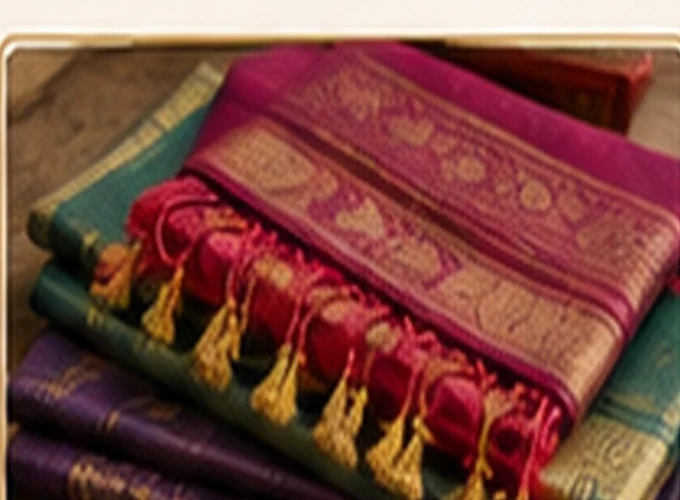
Multiple Indian weaving regions
Look closely at how colour transitions sit inside the weave—the pattern is carried by the yarn rather than printed on the finished cloth.
Making process
Technique leaves evidence.
The dyer binds and dyes the yarn to a plan before a single thread reaches the loom. The weaver then holds that pattern in alignment as the cloth grows.
We name a maker only when we can prove it. Where a piece carries a maker’s name, that name has been verified.
The pattern is dyed into the yarn before a single thread reaches the loom.
Where it comes from
Several distinct Indian traditions: Pochampally and the surrounding Telangana villages, patola from Patan in Gujarat, and bandha weaving in Odisha. Each has its own vocabulary and several hold Geographical Indications.
How the tradition developed
Resist-dyed yarn appears in weaving cultures across Asia, and the Indian traditions developed independently of one another with different structures and motifs. Patan patola is double ikat, in which both warp and weft are resist-dyed and must be aligned during weaving — technically the most demanding form, historically produced by a very small number of families.
How it is made
The dyer measures and marks the yarn to a plan, binds the sections that must stay undyed, and dyes the rest — repeating the binding and dyeing for each colour. Only then is the yarn mounted. As the weaver works, the pattern emerges from the thread itself, and the cloth must be adjusted continually to keep the design aligned. The slight blur along every edge is not imprecision; it is the unavoidable and defining signature of the method.
What it is made of
Cotton or silk yarn. Natural or synthetic dyes depending on tradition and workshop.
What to look at
The feathered edge is the proof. A printed imitation has hard edges and shows nothing on the reverse; true ikat is patterned right through the cloth. In double ikat, check how precisely warp and weft motifs meet.
Living with it
Dry clean silk. Cold wash cotton separately, dry in shade.
For gifting at volume
Stoles, cushion covers and accessories work well. Single ikat is realistic at volume; double ikat is a specialist purchase, not a bulk one.
Craft-level description compiled by TGA. We describe traditions and techniques here, not individual makers — a maker is named only where we have verified them.