
Craft · Varanasi · Uttar Pradesh
Banarasi Weaving
Silk weaving from Varanasi. Brocade effects, dense pattern, and loom work measured in weeks rather than hours.
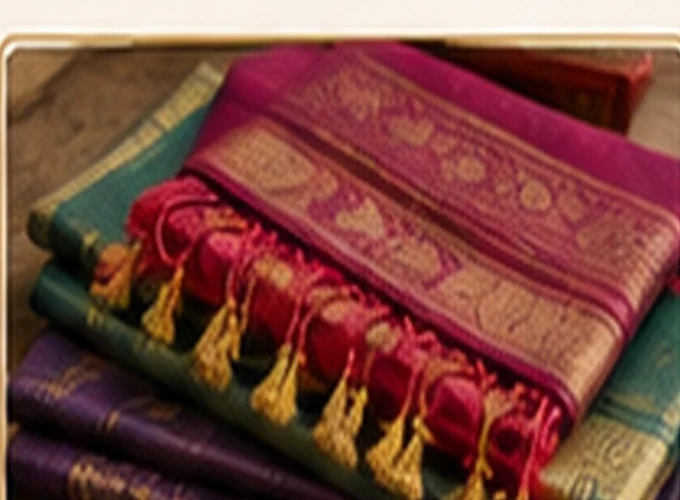
Varanasi · Uttar Pradesh
Look for the relationship between ground fabric, woven motif, border and pallu rather than judging the textile by ornament alone.
Making process
Technique leaves evidence.
The weaver dresses the loom, prepares the yarn, and brings the pattern into being pick by pick. Elaborate brocade can need a second pair of hands and a deliberately slow pace.
We name a maker only when we can prove it. Where a piece carries a maker’s name, that name has been verified.
Pattern carried on a supplementary weft — an extra thread that exists only to make the design.
Where it comes from
Varanasi and the villages around it, in eastern Uttar Pradesh. Weaving households have historically clustered in the city's older quarters, and the craft holds a Geographical Indication that ties the name to that region.
How the tradition developed
Varanasi has been a weaving centre for a very long time, but the brocade tradition as it is recognised today took shape under Mughal patronage, when Persian floral idiom met local weaving skill. That meeting is still legible in the vocabulary — the kalga and bel, the jhallar along the border, the scatter of small buti across the field.
How it is made
The weaver dresses the loom with the ground warp, then introduces a second, supplementary weft that has no structural job at all: it exists purely to form the pattern. Where the design calls for it, that thread floats to the surface; where it does not, it passes behind. On elaborate pieces the design is set up on a jacquard or, traditionally, called out by a second person working the pattern harness. Progress on a dense brocade can be a few centimetres in a day.
What it is made of
Mulberry silk for the ground. Zari — historically silver wire gilded with gold, now more often a tested metallic alternative — for the pattern.
What to look at
Turn the fabric over. The reverse of a hand-woven brocade shows the floats of the supplementary weft, cut or carried; a printed imitation shows nothing. Weight is informative too: real zari has heft. Look at where the border meets the body and check the pattern has been resolved rather than interrupted.
Living with it
Dry clean. Store folded in cotton or muslin rather than plastic, and refold along different lines once a year so the silk does not crease permanently in one place.
For gifting at volume
Best suited to executive and milestone gifting where a single high-value piece is right. Not a volume product — the weaving time makes large identical runs impractical.
Craft-level description compiled by TGA. We describe traditions and techniques here, not individual makers — a maker is named only where we have verified them.