
Craft · Kanchipuram · Tamil Nadu
Kanjeevaram Weaving
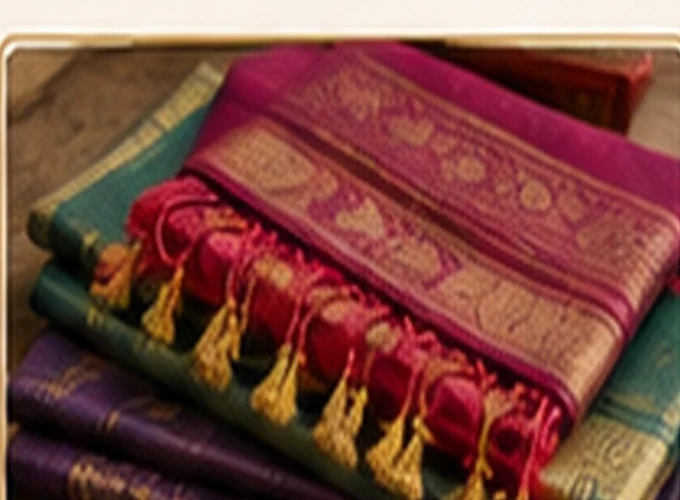
Silk weaving from Kanchipuram. Weighty cloth, architectural borders, and colour set against colour with intent.
Kanchipuram · Tamil Nadu
Look for the structure and weight of the silk, border construction, pallu treatment and balance between body and ornament.
Making process
Technique leaves evidence.
The weaver prepares the silk and works it on a handloom, building the border and pallu into the cloth rather than adding them to it.
We name a maker only when we can prove it. Where a piece carries a maker’s name, that name has been verified.
The border is not sewn on. It is woven separately and locked into the body.
Where it comes from
Kanchipuram and its surrounding villages in Tamil Nadu. The craft holds a Geographical Indication and supports a large weaving community.
How the tradition developed
Kanchipuram is a temple city, and the weaving tradition has been bound up with temple patronage and ceremonial dress. The motif vocabulary reflects that: forms drawn from temple architecture, the kumbam or pot, and the gopuram-like triangles that run along the border.
How it is made
The weaver uses a technique called korvai, in which the body and the border are woven from different warps and interlocked at the join as the cloth is made. Doing this by hand produces a distinctive interlocked seam that will not separate. The pallu is often woven separately again and joined with a visible, deliberate line. Three shuttles may be in use at once, and a heavy piece with dense zari can take weeks.
What it is made of
Mulberry silk, typically heavier than in other regions. Zari for the border and pallu.
What to look at
Look closely at the join between body and border. In korvai work you can see the interlocking; in a lesser piece the border is woven in or attached. Pull gently across that join — it should not gape. Weight is a fair proxy for silk and zari content.
Living with it
Dry clean. Store in cotton or muslin, never plastic, and refold periodically to avoid permanent creasing along the same lines.
For gifting at volume
A significant individual gift rather than a volume item. Appropriate for retirement, long-service and senior recognition.
Craft-level description compiled by TGA. We describe traditions and techniques here, not individual makers — a maker is named only where we have verified them.