
Craft · Central & Eastern India
Dhokra Metalcraft
Metal cast by the lost-wax method, where the mould is broken to free the object. Sculptural forms, textured surfaces, and no two alike.
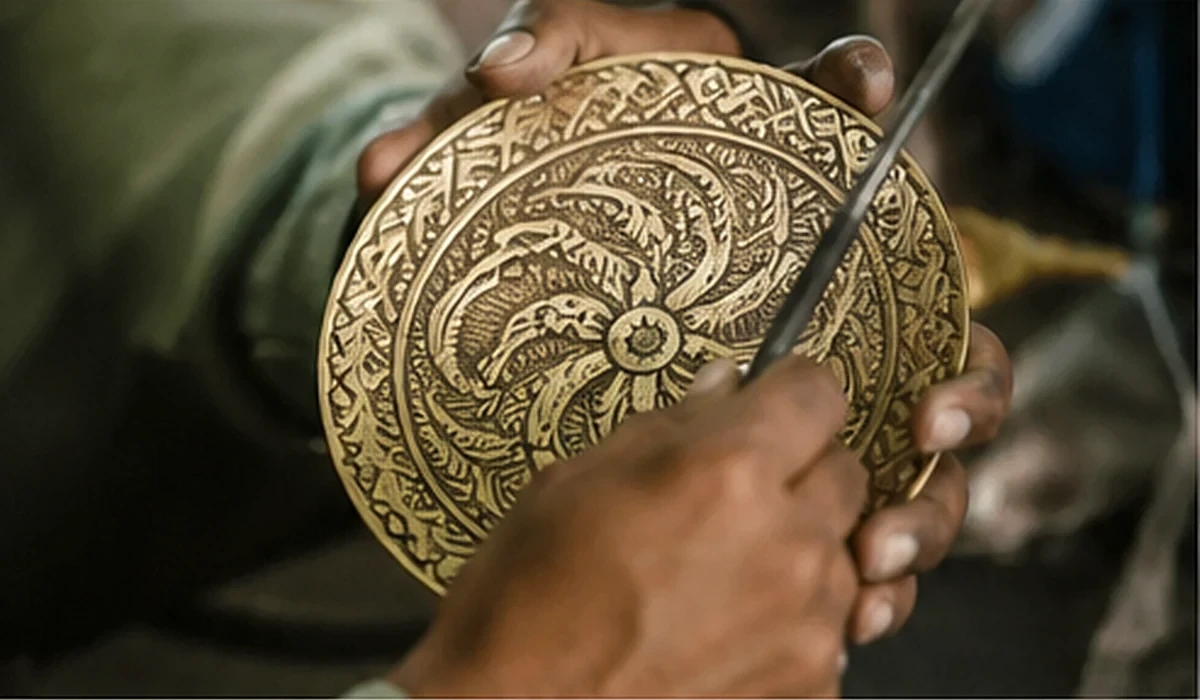
Central & Eastern India
Look for the evidence of hand modelling, coiled or patterned wax work and the individuality that comes from one-off casting.
Making process
Technique leaves evidence.
The caster builds a wax model over a core and packs it in mould material. Firing takes the wax away and leaves its cavity; molten metal takes its place. Breaking the mould releases the piece — which is why each casting is the only one of itself.
We name a maker only when we can prove it. Where a piece carries a maker’s name, that name has been verified.
One mould, one object. The mould is broken to release the casting.
Where it comes from
Practised in a belt across central and eastern India — Bastar in Chhattisgarh, districts of Odisha, Jharkhand and West Bengal. The name is associated with the Dhokra Damar metalworking communities.
How the tradition developed
The lost-wax method used here is among the oldest metal-casting techniques known on the subcontinent; the celebrated bronze figure recovered from Mohenjo-daro was made by a related process. What is distinctive about this tradition is that the wax is applied as fine drawn threads wound over the core, so the finished metal carries the coil pattern as surface.
How it is made
The caster builds a core of clay roughly in the shape of the object, then covers it with wax — often drawn into long threads and wound on in coils, which is where the characteristic ridged surface comes from. The wax is encased in successive layers of clay, leaving a channel. Firing hardens the mould and melts the wax out. Molten metal is poured into the cavity the wax has left. When it has cooled, the mould is broken open to free the piece. Nothing about the process is repeatable: the mould exists only once.
What it is made of
Bell metal or brass — copper alloyed with tin or zinc. Clay, wax, rice husk and dung for the mould.
What to look at
Look for the coil lines on the surface; they should read as deliberate winding, not as a stamped texture. Small casting irregularities are inherent and are not defects. Two pieces of the same design will differ, and should.
Living with it
Dust with a dry brush. Allow the natural patina to develop rather than polishing it away.
For gifting at volume
Distinctive for awards and senior recognition. Because each casting is individual, exact uniformity across a large order cannot be promised — specify a design and accept variation, or keep volumes modest.
Craft-level description compiled by TGA. We describe traditions and techniques here, not individual makers — a maker is named only where we have verified them.