Blogs
Meet the Weaver: A Day in the Life of a Craft Artisan
The sun
has just begun to rise over the quiet village of Kuthampally in Kerala.
Roosters crow in the distance. Inside a humble home with mud-plastered walls
and a courtyard shaded by a mango tree, 52-year-old Lakshmiamma is already
awake, preparing a pot of black coffee on the stove. Her day begins early—like
every weaver in her community—long before the rest of the world stirs.
This is a
glimpse into the craft artisan life, where artistry and tradition are
not just work, but a way of living.
Morning: Gathering Threads of Legacy
After her
morning prayers and a simple breakfast, Lakshmiamma steps into the outhouse
that serves as her workshop. Sunlight filters through the slatted roof, dancing
across the wooden handloom that has been in her family for generations.
She checks her supply of cotton yarn, much of which she has already treated
with natural dyes extracted from indigo leaves, turmeric, and madder roots.
Twice a
month, she walks with a group of women to a nearby co-op to source raw
materials—undyed yarn, starch from rice water, and locally available natural
dyes. These co-ops are the lifelines of rural artisans, ensuring fair trade and
access to traditional techniques.
The
sourcing isn’t just about picking up supplies—it’s about preserving
authenticity. This is where tradition and sustainability meet. And where
stories like hers begin to thread their way into each textile.
Midday: The Weave of Patience and Precision
By
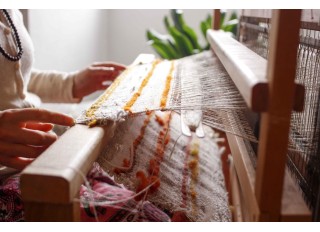
midmorning, Lakshmiamma is seated at her loom. The wooden pedals squeak
rhythmically beneath her feet as her hands guide the shuttle across the warp
threads. Her sari sways with each movement, and she hums softly—a song her
mother used to sing while weaving.
Each design
she creates is unique, inspired by temple murals, tropical flora, and the
festivals that light up her village. This is the heart of the weaver story—where
tradition, creativity, and devotion converge.
The
process is slow and meditative. For one cotton sari, it can take two to three
full days of weaving after days of prepping the yarn. But every thread she
tightens, every motif she sets, is imbued with quiet pride.
Afternoon: Breaks and Finishing Touches
After a
lunch of rice, vegetables, and coconut curry, she rests for a short while
before returning to her work. Now comes the detailing—checking for loose
threads, carefully tying ends, and occasionally redoing a motif that doesn’t
meet her eye.
She then
washes the completed fabric and dries it in the sun. A final pressing, done
with a coal-heated iron, seals the beauty of the textile. It's a ritual she has
followed for decades.
As she
folds the finished piece and places it on a wooden shelf, Lakshmiamma smiles.
It will soon travel to a new home—perhaps to someone who understands that
handmade means heart-made.
Evening: Reflections and Renewals
As the
sky softens to a dusky orange, she joins her neighbors under the banyan tree.
They exchange stories, laughter, and sometimes, worries about changing markets
and machine-made competition.
But hope
remains. Platforms like The Global Artisans bring visibility and dignity
to their work. Through these bridges, the world can see not just a finished
product—but the artisan profile, the story, the soul behind it.
Support the Weaver’s Legacy
Every
time you choose a handwoven piece, you are preserving centuries of culture,
empowering rural artisans, and adding meaning to your home.


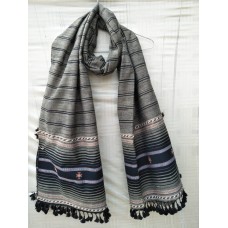
Kutch hand weaving Cotton Stole - Light and Dark blue
Cotton stol with two colour Light blue and dark blueSize. 24×88inchkutch hand weaving..
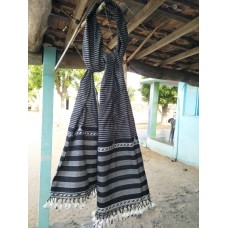
Kutch hand weaving Cotton Stole - Black and white Lining
Cotton stolSize. 24×88 Inchkutch hand weaving1. 80 gram..
Kutch Hand Weavig Silk Stole - Black
Kutch Hand Weavig Silk Stole - BlackSilk Stole - BlackMaterial - Silk ,Cotton Size - 24 x 88 In..
-228x228.jpeg "Cotton Stole- Hand Weaving")
Cotton Stole- Hand Weaving
Cotton Stole- Kutch Hand Weaving Size (25x88)..
-228x228.jpeg "Cotton Stole- Hand Weaving")
Cotton Stole- Hand Weaving
Cotton Stole- Kutch Hand Weaving Size (25x88)..



Leave your comment